Sci-Fi Hologram Screen Shader Unity
Overview
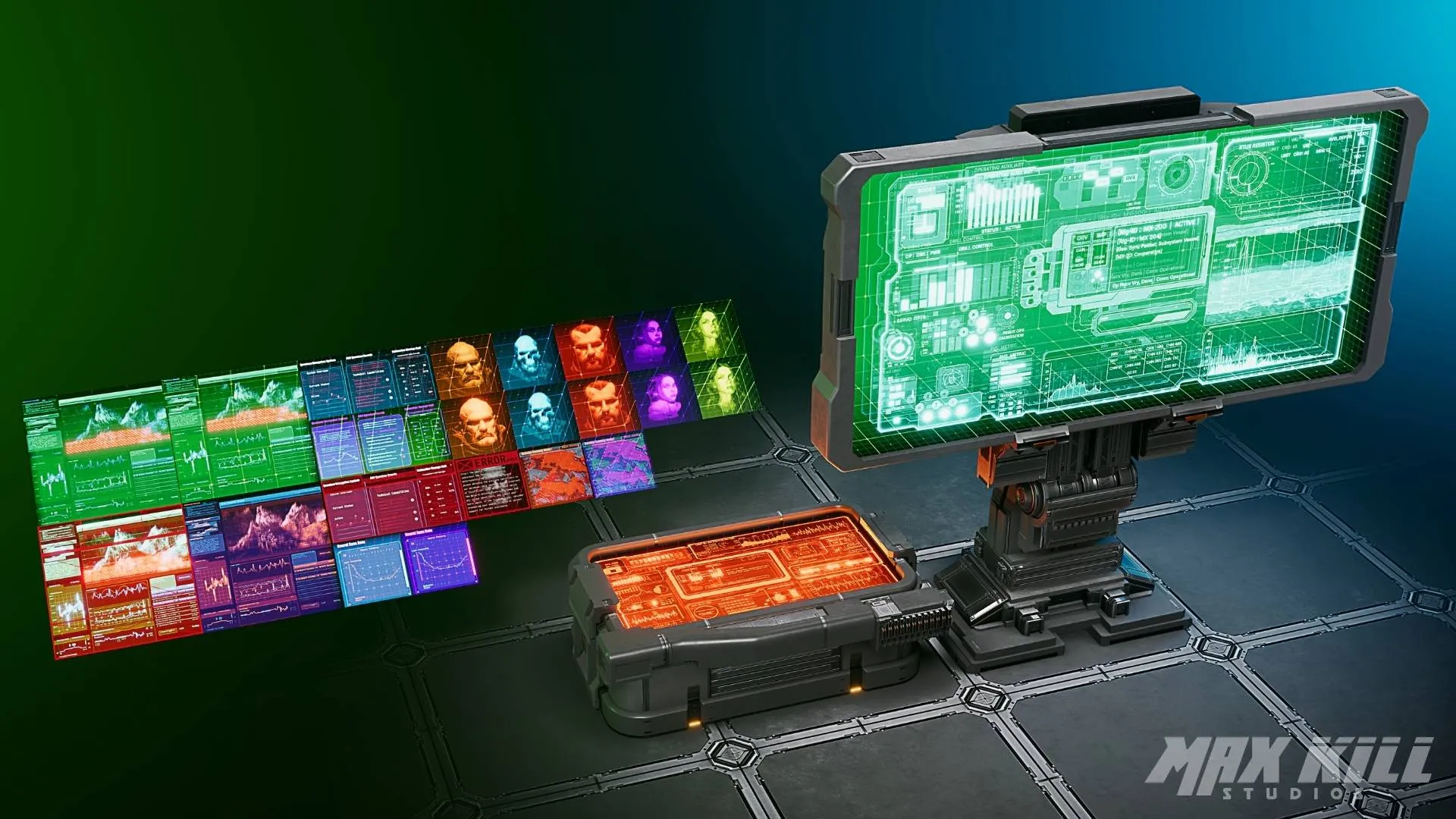
The Sci-Fi Hologram Screen Shader includes two shader variants for creating holographic screen effects on flat meshes. Uses interior mapping to simulate depth. Material-based, not a post-processing effect.
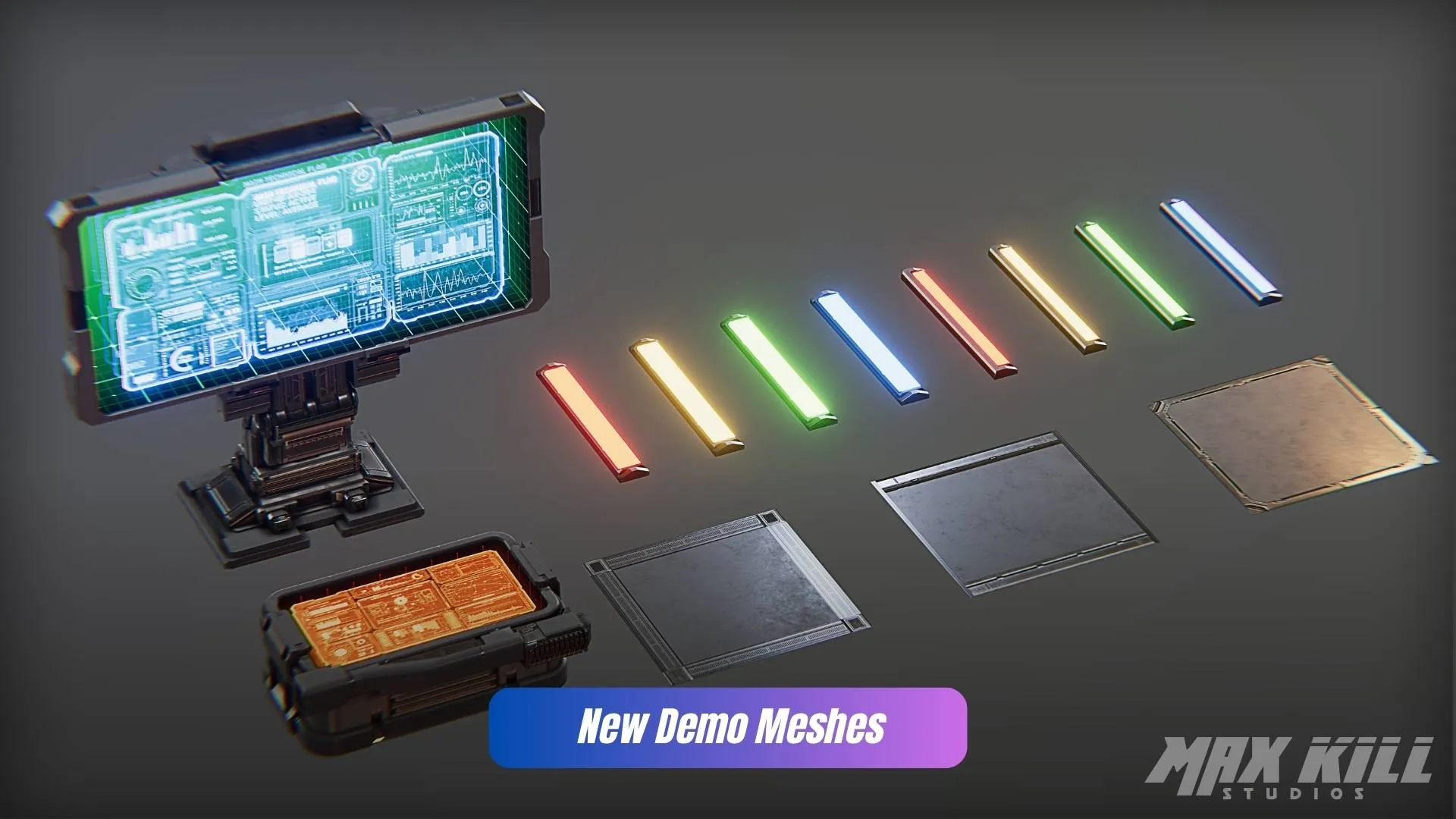
Included Prefabs
Available Shaders
_MaxKill Studios/SciFiHoloScreen/URP/SciFiHoloScreen URP
Default (Opaque): Renders sci-fi hologram screens without transparency. Ideal for terminal displays, static panels, or in-world monitors.
_MaxKill Studios/SciFiHoloScreen/URP/SciFiHoloScreen Additive URP
Additive Blend (Transparent): Uses additive blending for glowing, light-emitting displays. Screen content blends with the background.
- This shader renders in transparent mode and uses Unity’s built-in
Blend One Onefor light accumulation. - Ideal for HUDs, floating projections, or UI overlays.
Texture Creation
Textures use RGBA channels where each channel controls a separate hologram layer. Create them with Adobe Photoshop, Affinity Photo, Krita, or GIMP.
For a detailed guide on texture creation, see the Texture Creation Guide.
Release Notes
For version history and updates, see the Release Notes.